The greeting card is an overlooked cultural form that can help us connect and communicate at a time of increasingly dire environmental crises. This project is designed to meet the urgent need to foster an equitable and more-than-just-human convivium.
The greeting card is a technology that is familiar to us; we give cards and share sentiments at important life events as well as everyday occasions. Our greeting cards are designed to create openings that lead you in exploring your own climate feelings, not as lone expressions but thoughts in relation. They are shared as messages that recognize this extraordinary moment we’ve inherited. This project, like so many others constitute modest gestures of concern that are crucial for building the affective communities needed for larger social and political change. (Inspirations)
In 2019 with support from the Planet Texas 2050 project, we began working to create a set of greeting cards as a way of thinking critically about the constitution of community and the rhetoric of greeting in a time of crisis.
Over the years participants have joined us for lectures, reading groups, design workshops, and letter writing events. Hundreds of messages have been composed. Most of these have been addressed, stamped and sent through the postal system. How many more people have read those messages and shared them with others?
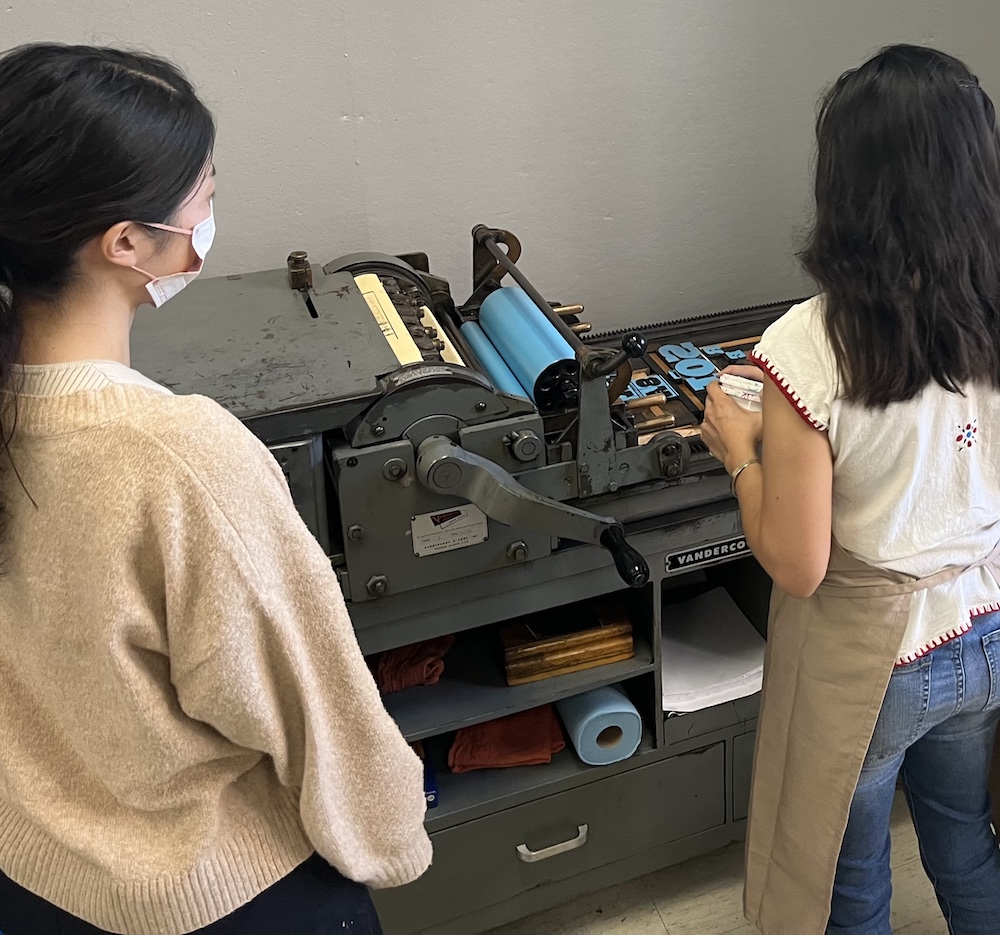
Happenings
Our happenings (aka events) include design and composition workshops, lectures, exhibitions, and a reading group. We’ve organized happenings in the USA and Canada, though our cards have been mailed around the globe.
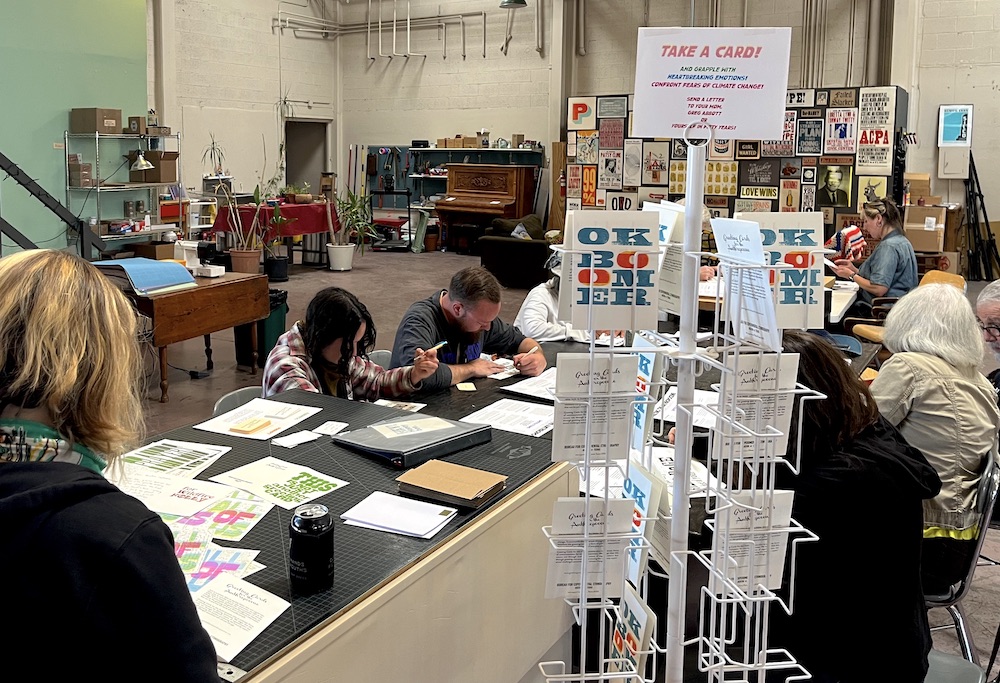
Greeting Cards
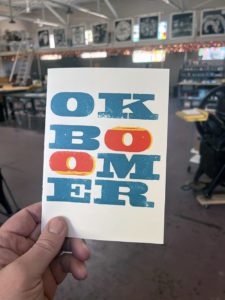
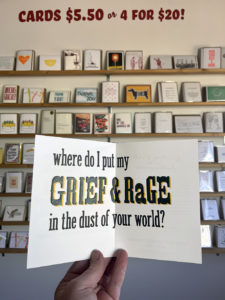
Our official greeting card collection has been growing since we began the project in 2019. They are often designed in collaboration with others. We prioritize the use of wood type and letterpress printing. The project was originally planned around the Rob Roy Kelly American Wood Type Collection. We also occasionally make use of metal and plastic type, and polymer plates.
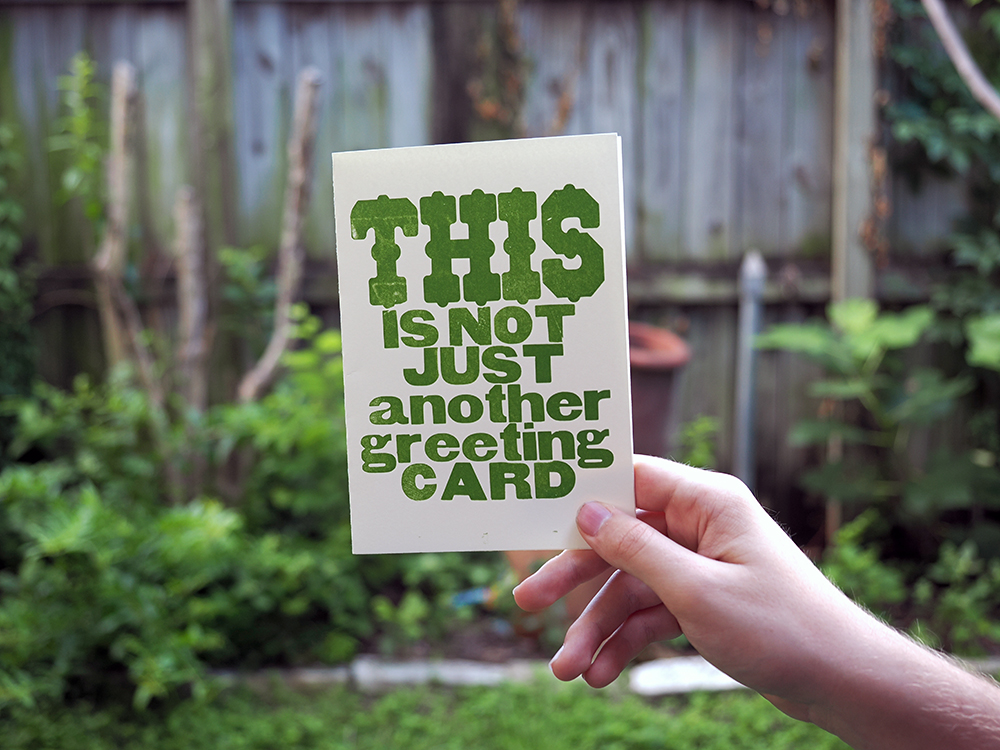
Writing Kits
Writing kits are still in the prototype stage our first iteration was workshopped in at McMaster University.
the people

Project Lead
Craig Campbell is Associate Professor of Anthropology at the University of Texas, Austin. Along with Marina Peterson and Casey Boyle he runs the Bureau for Experimental Ethnography. He also teaches on occasion at the School of Design and Creative Technologies.
As project lead, Craig designs and prints cards, leads workshops, develops programming and directions for the project, maintains the website, and is currently working on a book tentatively called Greeting the Anthropocene.
Collaborator
Casey Boyle is Associate Professor in the Department of Rhetoric and Writing at the University of Texas in Austin and Director of the Digital Writing & Research Lab where he researches and teaches digital rhetoric, media studies, accessibility, techno-poetics/ethics, and/as rhetorical history. He earned a BA at the University of Texas, an MA at the University of North Texas, and a PhD in the Rhetoric/Composition program at the University of South Carolina.

Acknowledgements
Most of the presses we use to print our greeting cards are located on the campus of the University of Texas at Austin, not far from Waller Creek. Following the lead provided by the Native American and Indigenous Studies program, we would like to acknowledge that our presses and studios are on the Indigenous lands of Turtle Island, the ancestral name for what now is called North America.
Moreover, We would like to acknowledge the Alabama-Coushatta, Caddo, Carrizo/Comecrudo, Coahuiltecan, Comanche, Kickapoo, Lipan Apache, Tonkawa and Ysleta Del Sur Pueblo, and all the American Indian and Indigenous Peoples and communities who have been or have become a part of these lands and territories in Texas.
Inspirations
Ingraham, Chris. 2020. Gestures of Concern. Duke University Press Books.
Jaffe, Alexandra. 1999. “Packaged Sentiments: The Social Meanings of Greeting Cards.” Journal of Material Culture 4 (2): 115–41.
Loveless, Natalie. 2019. How to Make Art at the End of the World: A Manifesto for Research-Creation. Duke University Press.
our affiliations